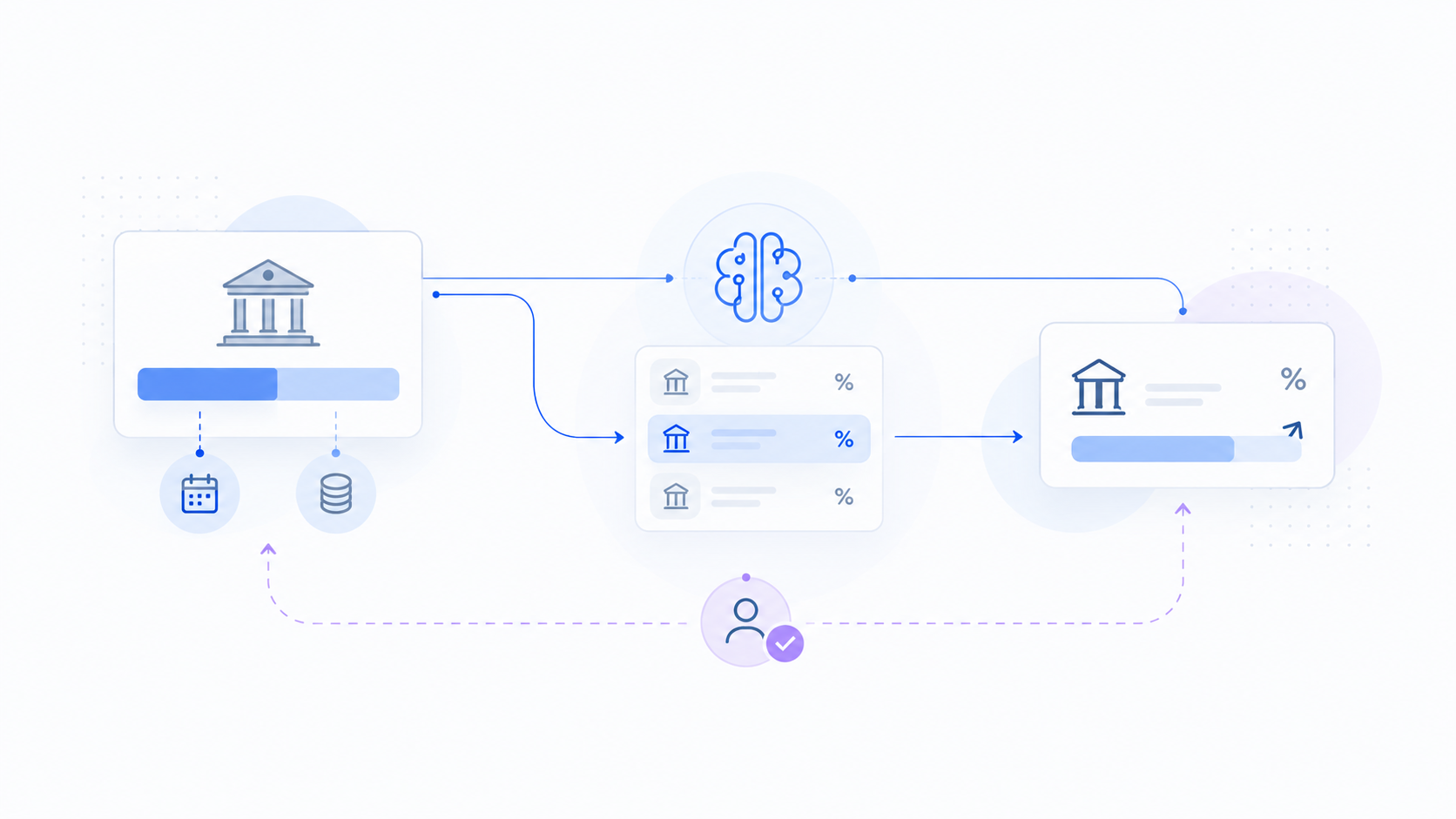
Banks expect to earn money by financing the data centers and other systems that support AI. During their October 13-14, 2026 earnings calls, they also faced questions about AI competing for their deposits. Personal AI agents could help customers find better interest rates and move money to other providers. The banks helping finance the technology could face new pressure from services built with it. Reuters
Wells Fargo CEO Charlie Scharf argued that customers already have access to higher rates. He called expectations of mass movement in the near term “completely overdone.” Customers keep money with a bank for payments and other services, he said. MarketWatch
For product leaders, this is a reason to examine behavior that seems stable. People may keep using a service because changing takes too much work. When new capabilities reduce that effort, another provider can offer a useful way to do part of the job. The opportunity depends on understanding which work customers would hand over and which needs the new service must protect.
JPMorgan’s response leaves room for that possibility. Its CFO, Jeremy Barnum, described agents as the meeting point of competition for higher returns and better customer experiences. He acknowledged the pressure while defending the value of being a customer’s primary bank. JPMorgan earnings call
The work behind an unchanged balance
Imagine a customer who keeps enough money in a checking account for bills and unexpected costs. Some of that money remains untouched each month. The customer knows that other accounts might pay more interest, but does not move it.
That balance alone tells you little about the reason. The customer might value immediate access to the money. They might be unsure how much they can move. They might also find the search and comparison too tedious to repeat.
A better rate does not finish the job. Someone must understand the terms, decide whether the gain is worth the effort, and keep enough money available for payments. They must then review the decision when rates, bills or income change.
An agent could remove some of that work. With permission, a service could compare options, explain the terms and prepare a proposed transfer for review. The customer could approve a specific action while keeping control of the decision.
That possibility deserves attention even if customers can already make transfers online. The new offer could reduce the effort of deciding what to do and when to do it.
Existing automation can perform parts of this job. AI needs a useful role, such as interpreting a customer’s goal or combining information from several sources. A product leader should identify the specific improvement before choosing the technology.
The customer might also keep the original account for salary and bills while using another service to manage part of the remaining cash. The bank could retain the payment relationship and face competition for some balances.
In Fine-tuning User Retention, I explored the limits of a simple stay-or-leave view. Here, that difference becomes a product opportunity. An account can stay open while the customer uses another provider for a specific task.
Customer hesitation helps define the service
The banks’ arguments about payments and trust deserve a serious response. A customer who keeps money available for bills has a need that a higher rate alone cannot meet.
Return to the same customer. A service recommends moving some cash, but the customer expects a large payment next week. A recommendation that misses that obligation fails the customer. This holds even if the proposed account pays more.
The product problem includes both a better return and dependable access to money. Removing effort creates value only when the service preserves what the customer needs.
This gives product leaders two questions to work through:
- Which reasons for customer inaction can the new capability remove?
- Which reasons must a successful service respect?
The first question covers search, comparison and repeated preparation. The second identifies what a successful service must respect: payment needs, control over decisions and access to help.
Trust also becomes more concrete when you examine what happens around a proposed action. The customer needs to understand what will change and what they are approving. If the result differs from the promise, they need a clear way to get help.
This is the thinking behind The AI product is the workflow. The offer has three parts. It includes the steps before an action, the limits on that action and the response when something goes wrong.
A service can therefore create value before customers accept broad automatic control. It can find an option, prepare a choice and explain the result it expects. Customers can decide whether to approve that action and whether to grant more permission later.
A challenger can use these concerns to define the service. It still needs to show that customers prefer the resulting offer.
A test for product leaders
The cash example gives us a practical test for other opportunities. A useful product hypothesis connects existing behavior, a change in capability and a customer outcome.
| Examine | Question to answer |
|---|---|
| The work behind the behavior | What does the customer want to do but leave undone, and why? |
| The change in capability | Which part becomes easier now, and what do existing tools leave unresolved? |
| The value to preserve | What must remain dependable when the service removes that effort? |
| The evidence to seek | What customer behavior would justify further investment? |
For cash management, an unchanged balance is a starting point for discovery. Talk with the customer and watch what they do. That can show whether they value the current arrangement or struggle to manage it.
The next step can be small. A proposed comparison or transfer lets a team learn what information customers need and where they hesitate. Approval of one proposal shows interest in that action. Repeated use and useful outcomes provide better reasons to invest further.
The test must also include failure. A service that moves more money but causes missed payments does not deliver the intended benefit. A service that asks customers to review every detail might preserve control while leaving most of the effort with them.
You need to judge whether the new service removes enough work, keeps the important protections and gives customers a reason to use it again. The model’s ability to complete a task is only part of that judgment.
Banks can compete for this work too
The banks are already exploring responses. Barnum described JPMorgan’s Smart Cash service as a targeted pilot. The bank’s shareholder letter describes automatic movement between checking and higher-yielding brokerage products. It presents AI prediction of cash needs as a future capability. JPMorgan earnings call, Shareholder letter
Banks bring payment services and established customer relationships. A new provider needs a specific reason for people to rely on its service.
For your own product, choose a customer behavior that your business treats as stable. Investigate what keeps that behavior in place. Check whether new capabilities can remove unwanted work while preserving what customers value. If they can, you have an opportunity worth testing.
That is the irony in the banks’ position. They are helping finance AI infrastructure that could give customers new ways to manage their money. The same capabilities can help banks serve those customers better. Product leaders on either side need to understand which reasons for staying will survive an easier choice.